Short-Range Model Wall
Forecaster Notes
- HRRR — 3-km hourly to F18/F48. Best for near-term convective mode.
- NAM-3km — convection-allowing, longer range than HRRR.
- RAP — hourly-updating analysis backbone of SPC mesoanalysis.
- GFS — global synoptic guidance to 384 h, coarse for convection.
- 500 mb vorticity — diagnose short-wave troughs and DPVA.
- 850 mb θe — boundary-layer moisture transport axis.
- Snow fields — compare accumulation/depth output against thermal profiles and DGZ quality.
Point Forecast & Alerts
Active Alerts
Next 24 Hours
Meteogram — T / Td / Wind / Precip-chance
Local Forecast Diagnostics
48-Hour Impact Index
Hourly Impact Matrix
Wind Rose
Weather Story
Official Guidance Desk
This desk pulls from official forecast offices and national centers: the local NWS Area Forecast Discussion, point/grid metadata, SPC severe products, WPC precipitation guidance, and NOAA model-analysis portals. It is meant to show the reasoning forecasters actually publish, then point you to the source product.
Point Product Metadata
National Guidance Sources
SPC Convective Outlooks →
Official categorical and probabilistic severe-weather outlooks.
spc.noaa.govWPC QPF →
Official quantitative precipitation forecasts and excessive rainfall context.
wpc.ncep.noaa.govNational Digital Forecast Database →
Official NWS gridded forecast fields behind many public forecast products.
digital.weather.govNational Blend of Models →
NOAA MDL overview for the NBM guidance system and its probabilistic products.
vlab.noaa.govSatellite — GOES-19 CONUS
Radar — Interactive Mosaic
NWS Radar →
Official single-site NEXRAD, velocity, spectrum width, and dual-pol products.
radar.weather.govSurface Analysis & Observations
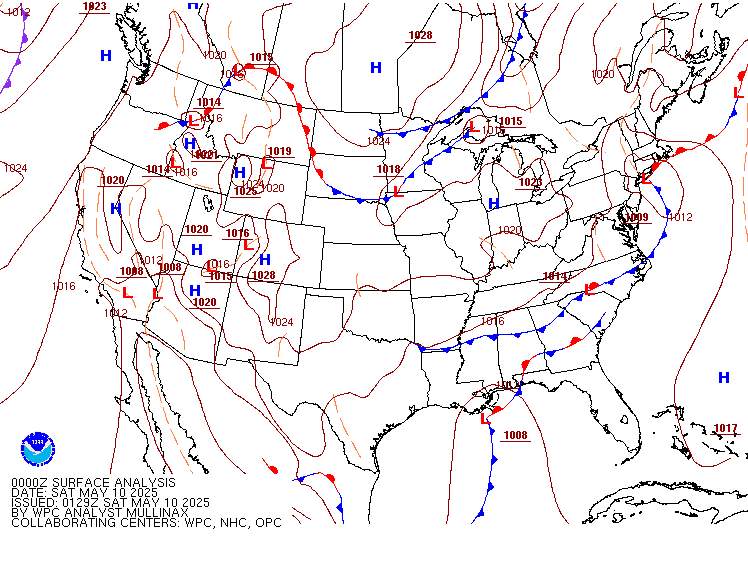
WPC Surface Analysis
Station Plots & Mesonet
IEM Mesonet Map →
Live METAR station plots, warnings overlays, and GIS tools.
mesonet.agron.iastate.eduAWC METAR Viewer →
Raw METAR/TAF with decoded clouds, vis, and wind shifts.
aviationweather.govSPC Mesoanalysis →
Real-time RAP-based mesoscale analysis: CAPE, shear, helicity, theta-e advection, moisture convergence.
spc.noaa.govIEM Current Conditions →
Regional dewpoint, wind gust, heat index, wet-bulb mesoscale plots.
IEM / mesonetSPC Mesoanalysis — Environment Diagnostics
Medium-Range & Ensemble Guidance
Model Intelligence Board
RRFS — Rapid Refresh Forecast System →
NOAA's UFS-based hourly, convection-allowing deterministic and ensemble successor path for rapid-refresh high-impact forecasting.
NOAA GSL experimental AIHRRRCast v3 →
Experimental NOAA regional AI forecast model at 3-km resolution, useful context for where convective-scale guidance is heading.
NOAA GSL tropicalHAFS — Hurricane Analysis and Forecast System →
Operational UFS hurricane guidance with storm-following nests, inner-core data assimilation, and atmosphere-ocean-wave coupling.
NOAA/NCEP EMC ensembleHREF / HIRESW →
Convection-allowing ensemble products from time-lagged CAM guidance; especially valuable for severe and mesoscale snowband probabilities.
NOAA/NCEP EMCTropical Tidbits — GFS →
Clean operational GFS graphics out to F384. Best for quick synoptic scans.
tropicaltidbits.comTropical Tidbits — ECMWF →
The standard global benchmark. Watch the 500 mb pattern 5-10 days out.
tropicaltidbits.comGEFS Ensemble →
31-member NCEP ensemble. Use spaghetti + ensemble means to gauge confidence.
tropicaltidbits.comECMWF Open Charts →
Official ECMWF medium-range charts, including MSLP + 850 wind and 2m T anomalies.
charts.ecmwf.intCPC 6-10 Day Outlook →
Probabilistic temperature and precipitation anomalies — anchors the extended outlook.
cpc.ncep.noaa.govCOD NEXLAB Models →
Exhaustive model comparison: HRRR, NAM, GFS, ECMWF, ICON, CMC, HREF.
weather.cod.eduSevere Weather Desk
SPC Day-1 Convective Outlook

Watches, Warnings, Reports
Active Watches →
Tornado and severe T-storm watches with PDS criteria.
SPCToday's Storm Reports →
Tornado / hail / wind LSRs plotted nationally.
SPCDay-2 Outlook →
Next-day categorical + probabilistic severe risk.
SPCDay 4-8 Outlook →
Medium-range severe probability outlook (30% / 15%).
SPCWinter Weather Desk
WPC Winter Weather Forecast
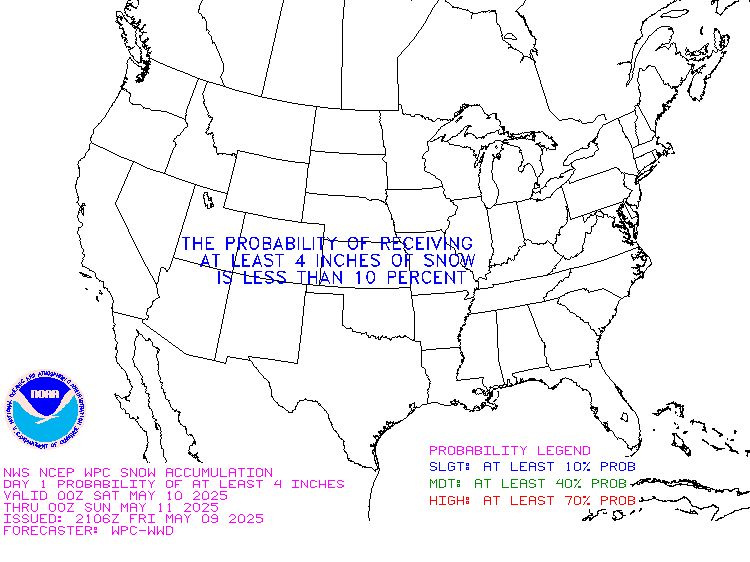
WPC Winter Weather →
Snow / ice probabilities Days 1-3 with exceedance thresholds.
wpc.ncep.noaa.govProbabilistic Snow →
WPC winter precipitation probabilities and exceedance thresholds.
WPC PWPFNOHRSC Snow Analysis →
Observed SWE, snow depth, and snowfall analysis grid.
nohrsc.noaa.govCOD Snowfall Plots →
Kuchera snow-ratio snowfall fields, multiple models.
weather.cod.eduGFS Precip-Type →
Rain / snow / sleet / freezing rain classification with MSLP.
tropicaltidbits.com850 mb Thermals →
Classic 850 and 700 mb temperature diagnostic fields.
tropicaltidbits.comTropical & Marine
NHC Atlantic Two-Week Outlook
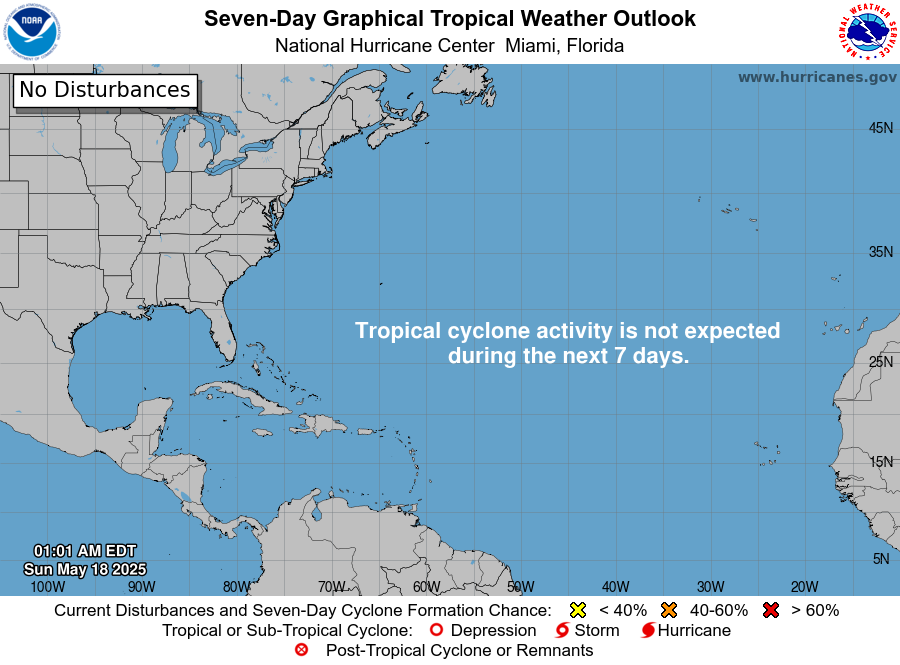
NHC Home →
Active systems, cones, advisories, and invest outlooks.
nhc.noaa.govOcean Prediction Center →
High-seas analysis, wind/wave forecasts, extratropical cyclone warnings.
ocean.weather.govWAVEWATCH III Viewer →
Operational global significant wave height, period, and direction.
NOAA / NCEP MAGHurricane Models (HWRF/HAFS) →
Storm-scale tropical cyclone forecast guidance.
tropicaltidbits.comCIMSS Tropical →
Deep-layer shear, SHIPS, ADT intensity estimates, TC microwave.
tropic.ssec.wisc.eduNHC GIS Products →
Best-track shapefiles, forecast cones, wind-field swaths.
nhc.noaa.govUpper-Air Lab — Radiosondes, Soundings, Synoptic Structure
Twice-daily radiosonde observations are the anchor for diagnosing the real vertical column: cap strength, moisture depth, freezing-level structure, jet streaks, lapse rates, and the wind profile. This page maps the RAOB network around the selected dashboard point and links directly into official NOAA/SPC/NCEP upper-air products.
SPC Observed Sounding Cycle
Selected Station Sounding
CONUS RAOB Network
Nearest Sounding Sites
Selected Station
Official Upper-Air Workbench
SPC Observed Sounding Archive →
Current and recent observed radiosonde data in NSHARP skew-T format, with experimental derived parameters.
spc.noaa.gov observedNOAA READY Observed Soundings →
NOAA ARL sounding generator for selected observing locations and archived cycles.
ready.noaa.gov analysisSPC Upper-Air Maps →
Objectively analyzed 925, 850, 700, 500, 300, and 250 mb maps from observed upper-air data.
spc.noaa.gov climatologySPC Sounding Climatology →
Observed-sounding climatology with parameter distributions and recent-observation overlays.
spc.noaa.gov model soundingNCEP MAG Forecast Soundings →
Official NCEP model forecast-sounding portal for comparing future profiles against observed RAOB structure.
mag.ncep.noaa.gov ensembleSPC HREF Ensemble Viewer →
SPC interface for calibrated HREF severe-weather and synoptic ensemble fields.
spc.noaa.gov medium rangeCPC Upper-Air Tools →
Official CPC 500 mb and 700 mb height, anomaly, correlation, and analog products.
cpc.ncep.noaa.gov methodologySPC Mesoanalysis Documentation →
Technical notes on SPC objective analysis, RAP first guess, and NSHARP-derived severe parameters.
spc.noaa.govGOES-East Satellite Loop
Space Weather — NOAA SWPC
Planetary K-index (3-day)
Solar Wind (real-time)
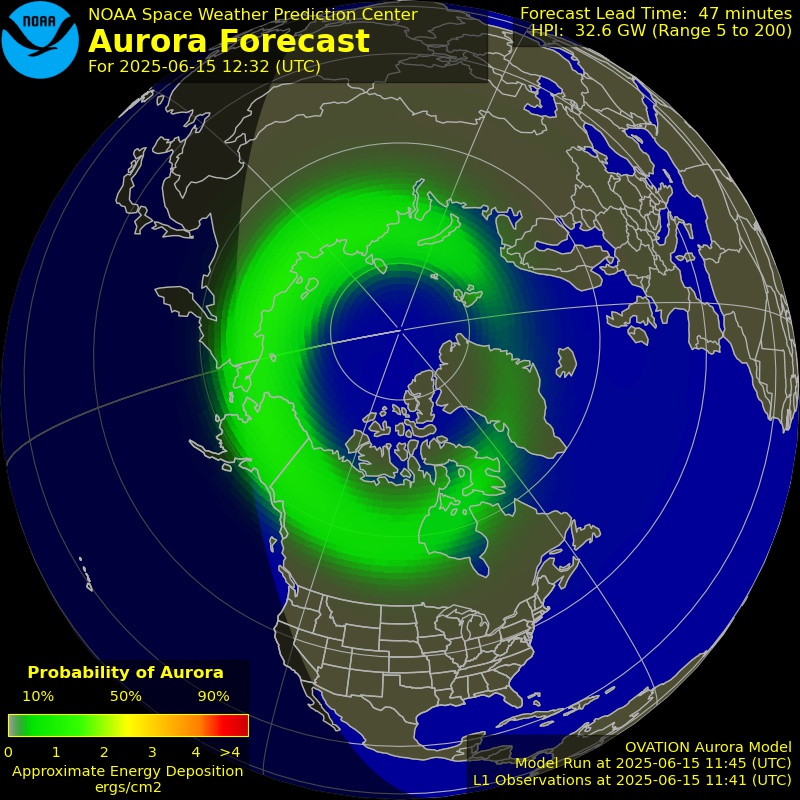
Aurora Forecast — Ovation Model
GOES X-Ray Flux
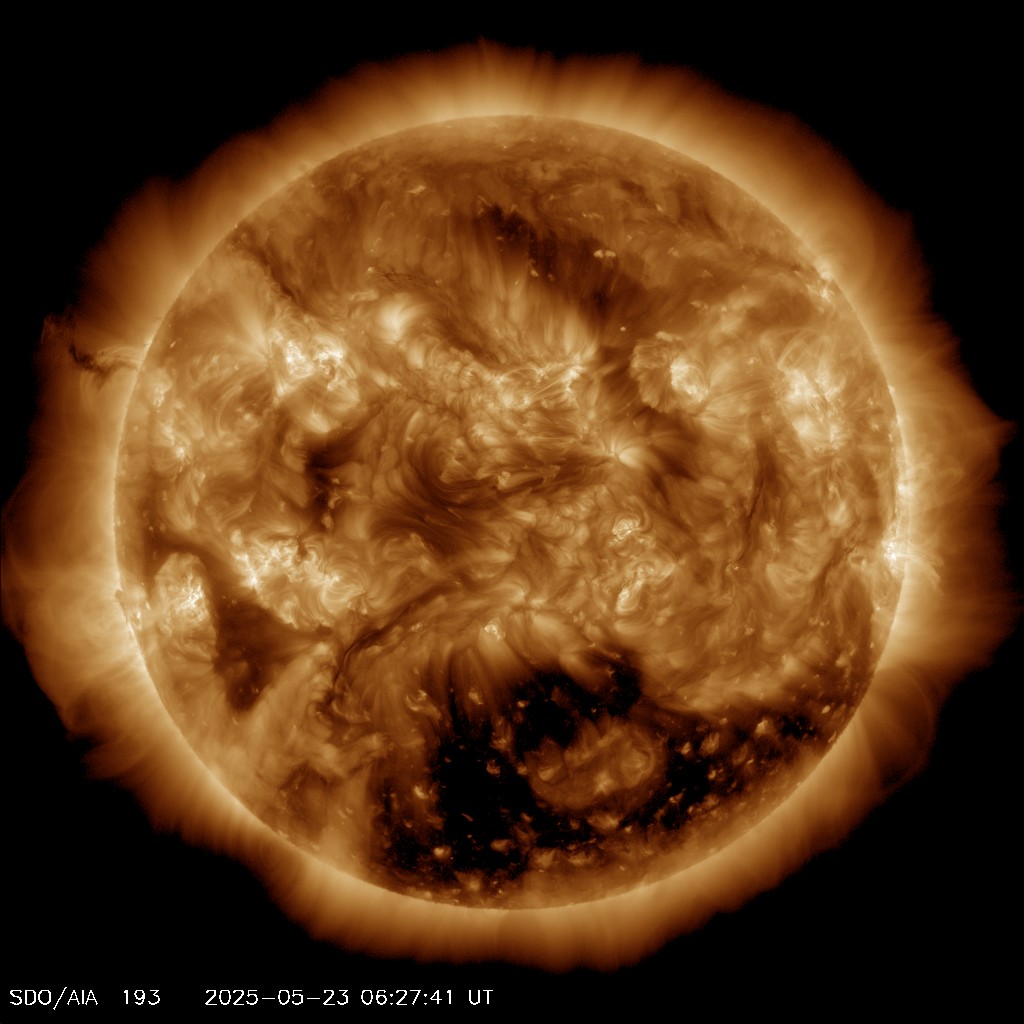
Solar Disk — SDO AIA 193 Å
Marine Desk — Buoys, Waves, SST
Nearest NDBC Buoy
Global Significant Wave Height
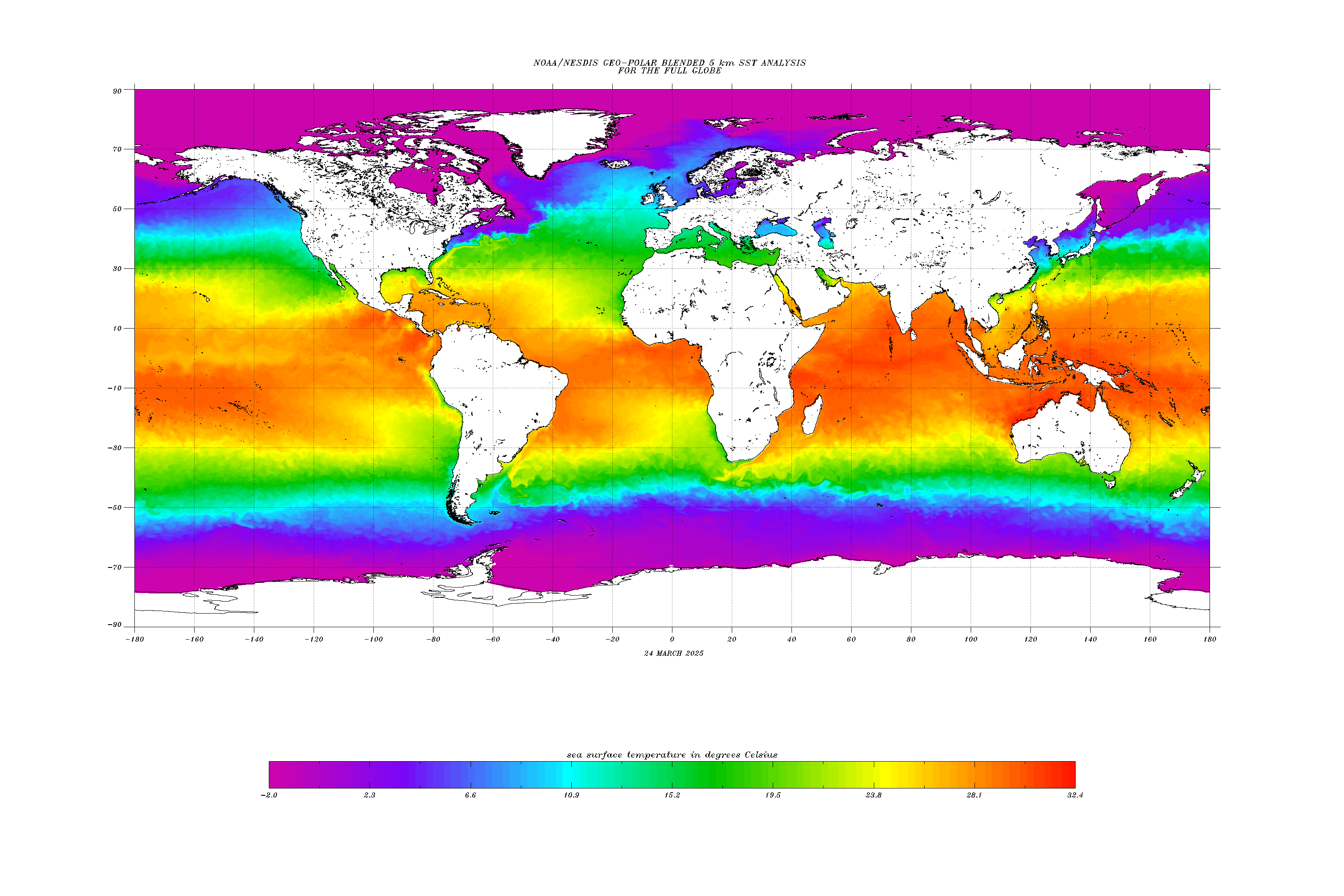
SST / OSPO Sea Surface Temperature